
Culinary Classes
What Should You Look for in a Cooking Class Near Bedminster?
By The Bedminster Tavern
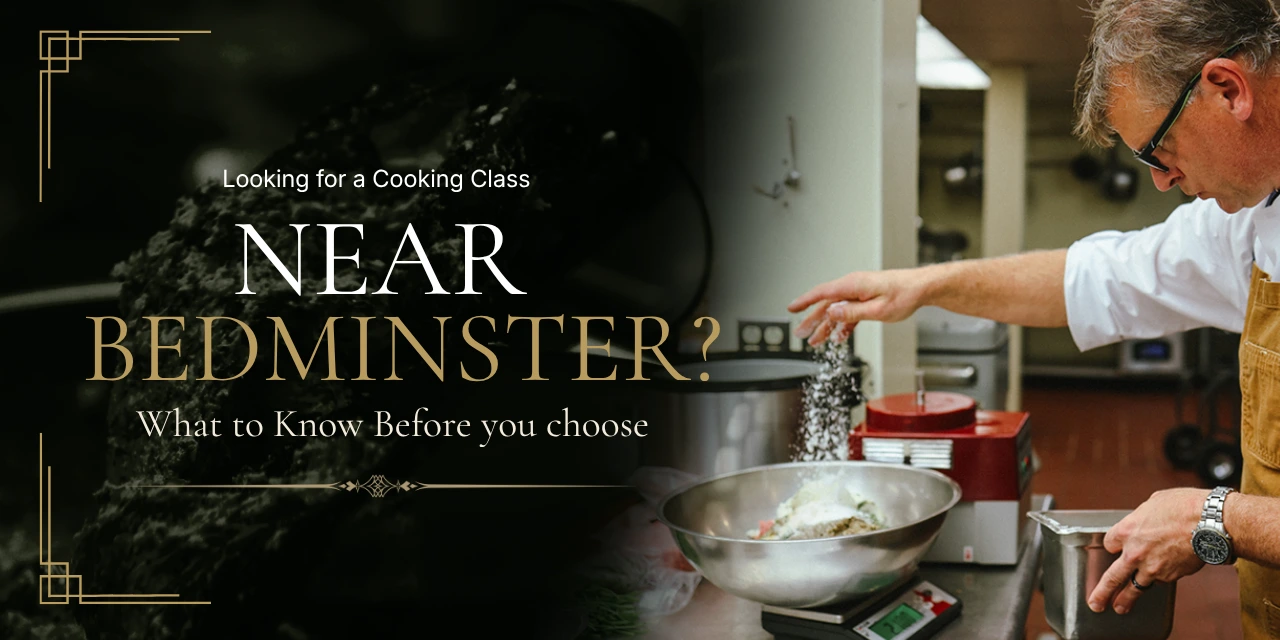
Quick answer: When choosing a cooking class near Bedminster, look at who is teaching, whether the class matches your experience level, how hands-on it is, what techniques you will learn, and how ingredients are approached. A chef-led class should give you more than a recipe. The best classes help you understand how to make better decisions in your own kitchen.
- Choose a cooking class based on what you want to learn or experience, not simply the dish being prepared.
- The instructor's professional experience can significantly shape the value of the class.
- Beginners do not necessarily need prior culinary training to benefit.
- Look for transferable techniques rather than a class built only around reproducing one recipe.
- Ingredient quality and seasonality can be as important to cooking as technique.
- Cooking classes can work well as a culinary experience for couples, friends, and curious home cooks.
- At The Bedminster Tavern, culinary classes led by Executive Chef Christopher Albrecht connect professional technique with his Farm-to-Fork approach to food.
- What should you look for in a cooking class?
- Who is teaching the class?
- Should you choose hands-on or demonstration-style classes?
- Do you need cooking experience?
- What should you expect to learn?
- Why should ingredients and seasonality matter?
- What does Farm-to-Fork mean in a cooking class?
- Are cooking classes good for date night?
- Are cooking classes good for friends?
- What should you ask before choosing a class?
- What makes Chef Christopher's classes different?
- Frequently Asked Questions
What Should You Look for in a Cooking Class near Bedminster?
Cooking classes can be very different experiences.
One may be primarily a demonstration.
Another may put a knife in your hand and ask you to start chopping.
Some focus on completing a particular dish.
Others use the dish as a way to teach techniques you can apply repeatedly at home.
That is why the first question should not necessarily be:
"What are we cooking?"
A better question is:
"What do I want to get out of the experience?"
Maybe you want to become more confident in the kitchen.
Maybe you want to understand professional cooking techniques.
Maybe you are interested in seasonal ingredients.
Maybe you and your partner are looking for something different to do together.
Maybe you simply enjoy food and want to learn from someone who has spent a career thinking about it.
Once you understand your goal, choosing a small culinary course or activity in Bedminster becomes much easier.
Who Is Teaching the Cooking Class?
The instructor may be the most important difference between one cooking class and another.
Knowing how to cook professionally and knowing how to explain cooking are related but different skills.
A good culinary instructor should be able to help you understand:
What to do.
Why you're doing it.
What to look for while you're doing it.
What to change when something does not go according to plan.
That last point is especially useful.
Recipes tend to assume ideal conditions.
Real kitchens rarely cooperate quite so neatly.
An experienced chef can explain why something is happening and help you understand how to respond.
When comparing chef-led cooking classes, look at the instructor's actual background.
Where have they cooked?
What kind of experience do they bring?
Do they have a clear culinary point of view?
What can they teach you beyond the steps of one recipe?
The person teaching the class should be part of the reason you choose it.
Should You Choose a Hands-On or Demonstration-Style Cooking Class?
Both formats can be valuable, but they provide different experiences.
Demonstration-style classes
In a demonstration, you primarily watch the chef cook and explain.
This can be useful when the technique requires specialized equipment, when the chef is demonstrating several steps efficiently, or when the educational focus is observation and discussion.
The advantage is that you can concentrate on what the chef is doing without simultaneously worrying about your own pan.
Hands-on classes
Hands-on learning gives you an opportunity to practice.
You can feel how an ingredient responds.
You can try the technique yourself.
You may make a mistake and learn why it happened.
For many home cooks, that physical experience helps the lesson stick.
Combination classes
Some culinary experiences combine demonstration, participation, tasting, and discussion.
There is no universally superior format.
The important thing is knowing what you are signing up for.
If you want to cook, make sure the class actually provides that opportunity.
If you prefer to watch, taste, ask questions, and learn, a demonstration can be just as valuable.
Do You Need Cooking Experience to Take a Class?
Not necessarily.
A professional chef may have decades of experience.
That does not mean you need decades of experience to learn from one.
The right skill level depends on the individual class.
Some culinary classes are designed for beginners.
Others may assume participants are already comfortable with certain techniques.
Before registering, check the class description or ask whether there are prerequisites.
But do not let the words "professional chef" convince you that a class is automatically too advanced.
Good culinary education translates professional knowledge into something useful for the participant.
The objective is not necessarily to teach you how to operate a restaurant kitchen.
It is to help you cook with greater understanding and confidence.
What Should You Expect to Learn From a Professional Chef?
A good class should give you something you can use after the experience ends.
That is why transferable techniques are so valuable.
Knife skills
Better knife technique can make preparation safer, more consistent, and more efficient.
Heat control
Understanding when a pan is ready, when heat is too high, and when to adjust it can change the outcome of many dishes.
Seasoning
Professional cooks develop a habit of tasting and adjusting throughout the cooking process rather than treating seasoning as a final step.
Texture
Crisp, tender, creamy, juicy, caramelized, and properly cooked are outcomes that require different decisions.
Timing
A meal is not finished when each individual component is done.
It is finished when everything is ready at the right time.
Ingredient selection
Good cooking starts before you turn on the stove.
Understanding quality, freshness, seasonality, and how an ingredient should be used can change the entire dish.
These skills are more valuable than memorizing a single set of instructions because they travel from one recipe to another.
Why Should Ingredients Matter in a Cooking Class?
Technique matters.
But technique begins with something.
An ingredient has flavor, texture, moisture, ripeness, and seasonality before a chef ever touches it.
That means one of the most valuable things a professional chef can teach is how to look at an ingredient before deciding what to do with it.
Consider a tomato.
A recipe may specify tomato as though every tomato were interchangeable.
A chef is more likely to consider:
How ripe is it?
What does it taste like?
What is its texture?
Is this the right time of year for it?
Does it need cooking at all?
What preparation will make it better rather than simply make it different?
That way of thinking changes cooking.
Instead of forcing ingredients into a predetermined idea, you begin paying attention to what the ingredient is telling you.
How Does Seasonality Change the Way You Cook?
Seasonality can change both the ingredients available and the way a chef approaches them.
When an ingredient is at its best, the goal may be to preserve more of its natural character.
At another point in the year, different ingredients may invite different techniques.
Seasonal thinking encourages home cooks to ask:
What's especially good right now?
What naturally goes with it?
What cooking method makes sense?
How much do I actually need to do?
It also makes cooking less repetitive.
Instead of preparing the same meals the same way throughout the year, the season provides another source of inspiration.
That thinking is central to Executive Chef Christopher Albrecht's approach at The Bedminster Tavern.
What Does Farm-to-Fork Mean in a Cooking Class?
Many people are familiar with the term farm-to-table.
At The Bedminster Tavern, the preferred expression is Farm-to-Fork.
Both ideas emphasize the connection between the people who produce ingredients, the chef who prepares them, and the guest who ultimately enjoys the food.
Chef Christopher's Farm-to-Fork philosophy places particular emphasis on seasonality, thoughtful sourcing, relationships with farmers and producers, ingredient quality, and classical culinary technique.
In a cooking class, those ideas become practical.
Instead of simply hearing that sourcing matters, you can learn why the characteristics of an ingredient affect the way it should be cooked.
Instead of hearing that seasonality matters, you can explore how a chef makes decisions based on what is available and tasting good.
Instead of treating farm-to-table as a restaurant label, you begin understanding it as a way of thinking about food.
That connection between ingredients and technique is one of the most valuable things culinary education can provide.
Are Cooking Classes Good for Date Night?
They can be an excellent option for couples who want something more interactive than dinner alone.
A cooking class gives you a shared activity.
You are not simply watching something happen.
You are learning, tasting, talking, and experiencing it together.
There is also very little pressure to manufacture conversation because the experience gives you something to discuss.
You may discover a new technique.
You may disagree about the correct way to chop something.
You may learn that one of you has been dramatically overcooking vegetables for years.
That is part of the fun.
For couples around Bedminster and the Somerset Hills who already enjoy dining out, a culinary class provides another way to explore food together.
It can also make a natural companion to date-night dining rather than competing with it.
Are Cooking Classes Good for Friends?
Yes, especially for people who already connect around food.
A culinary class gives a group something to do without requiring constant structured entertainment.
You can participate.
Talk.
Taste.
Ask questions.
Learn something.
And compare results.
That makes cooking classes a useful option for friends who want a social experience that is different from simply meeting for dinner or drinks.
The value is not necessarily that everyone leaves as a better chef.
It is that everyone shares the experience.
What Should You Ask Before Choosing a Cooking Class in Bedminster?
Before registering, look for answers to a few practical questions.
Who teaches the class?
Understand the instructor's experience and culinary perspective.
What is the class about?
A clear subject helps you decide whether it matches your interests.
What skill level is appropriate?
Ask whether beginners are welcome or prior experience is expected.
Is the class hands-on?
Do not assume "cooking class" automatically means every participant cooks.
What techniques will you learn?
Look beyond the finished dish.
What is included?
Check the specific class description for what participants should expect.
How long is the experience?
Class duration can affect both what is covered and how you plan the rest of your day or evening.
Are there dietary considerations?
If you have dietary restrictions or food allergies, discuss them before registering rather than assuming substitutions will be available.
What should you wear or bring?
Follow the instructions for the specific class.
A well-described culinary class should answer the practical questions that affect whether the experience is right for you.
What Makes Chef Christopher Albrecht's Culinary Classes Different?
Chef Christopher brings a substantial professional background to culinary education at The Bedminster Tavern.
A graduate of the Culinary Institute of America, his career includes working with chef Tom Colicchio at Gramercy Tavern and Craft, as well as leadership roles at respected New Jersey restaurants including Eno Terra and The Ryland Inn.
But résumé alone is not the point of a cooking class.
The more useful question is:
What can that experience teach you?
Chef Christopher's culinary perspective connects:
Classical technique
Seasonality
Ingredient quality
Thoughtful sourcing
Relationships with farmers and producers
Farm-to-Fork cooking
That provides a broader framework than simply teaching someone how to reproduce a restaurant dish.
The class becomes an opportunity to understand some of the decisions behind the food.
Why this ingredient?
Why this technique?
Why this temperature?
Why now?
Why does seasonality matter?
Those questions are useful whether you are cooking in a professional kitchen or making dinner at home.
Where Can You Find Cooking Classes Near Bedminster?
The Bedminster Tavern offers culinary classes led by Executive Chef Christopher Albrecht at 285 Main Street in Bedminster, New Jersey.
The Tavern serves Bedminster and the surrounding Somerset Hills, including guests looking for chef-led culinary experiences in the area.
Individual classes vary, so the best way to determine whether a particular class is right for you is to review its subject, format, and class-specific details.
If you are interested in upcoming culinary classes, join The Bedminster Tavern email list for announcements and What's Happening updates.
Frequently Asked Questions
Where can I take a cooking class near Bedminster, NJ?
The Bedminster Tavern at 285 Main Street in Bedminster offers culinary classes led by Executive Chef Christopher Albrecht. Check the Tavern's What's Happening information or join the email list for individual class announcements.
Who teaches cooking classes at The Bedminster Tavern?
Executive Chef Christopher Albrecht leads culinary classes at The Bedminster Tavern. His professional background includes the Culinary Institute of America, Gramercy Tavern, Craft, Eno Terra, and The Ryland Inn.
Do I need cooking experience to attend a chef-led class?
Not necessarily. Skill requirements depend on the individual class. Review the class description to determine whether it is designed for beginners, experienced home cooks, or a broader audience.
Are cooking classes hands-on?
Cooking-class formats vary. Some are hands-on, some demonstration-based, and others combine instruction, participation, tasting, and discussion. Check the specific class description before registering.
Are cooking classes a good date-night activity?
Yes. Culinary classes can provide couples with a shared, interactive experience centered on food, learning, tasting, and conversation.
What can I learn in a professional cooking class?
Depending on the subject, classes may explore techniques, ingredient preparation, seasoning, heat control, timing, flavor, seasonality, and how professional chefs make culinary decisions.
What does Farm-to-Fork mean at The Bedminster Tavern?
Farm-to-Fork is The Bedminster Tavern's expression of the philosophy many diners know as farm-to-table. It connects seasonality, thoughtful sourcing, relationships with farmers and producers, culinary technique, and the food served to guests.
About The Bedminster Tavern
The Bedminster Tavern is a neighborhood gathering place at 285 Main Street in Bedminster, New Jersey, serving Bedminster and the surrounding Somerset Hills.
Executive Chef Christopher Albrecht leads the Tavern's Farm-to-Fork culinary philosophy, connecting seasonality, thoughtful sourcing, classical technique, and relationships with farms and producers.
Chef-led culinary classes give guests another way to experience that philosophy by exploring not only what a chef cooks, but how a chef thinks about food.
Find Your Next Culinary Experience
Interested in taking a cooking class near Bedminster?
Join The Bedminster Tavern email list for culinary class announcements, Chef Christopher updates, seasonal experiences, and What's Happening at the Tavern.
Join the email list for more from the Tavern.